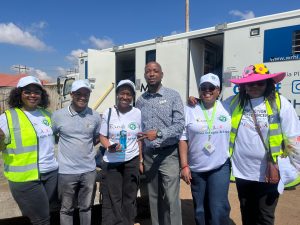
The National Institute for Communicable Diseases (NICD) is hosting the Technical Assistance Partnership for Wastewater and Environmental Surveillance (TAP-WES) Training Programme in Johannesburg from 20–31 July 2026. The programme brings together laboratory scientists, biomedical scientists, and scientific officers from Ghana, Nigeria, Uganda, Zambia, and Mozambique to strengthen wastewater and environmental surveillance (WES) capacity across the African continent.
TAP-WES is a regional initiative that positions the NICD as a technical and training hub for wastewater and environmental surveillance in Africa. The programme supports countries to design, implement, and scale sustainable WES systems by providing technical assistance, training, mentoring, and opportunities for peer learning. It adopts a pathogen-agnostic approach while supporting surveillance of priority pathogens identified by the World Health Organization (WHO).
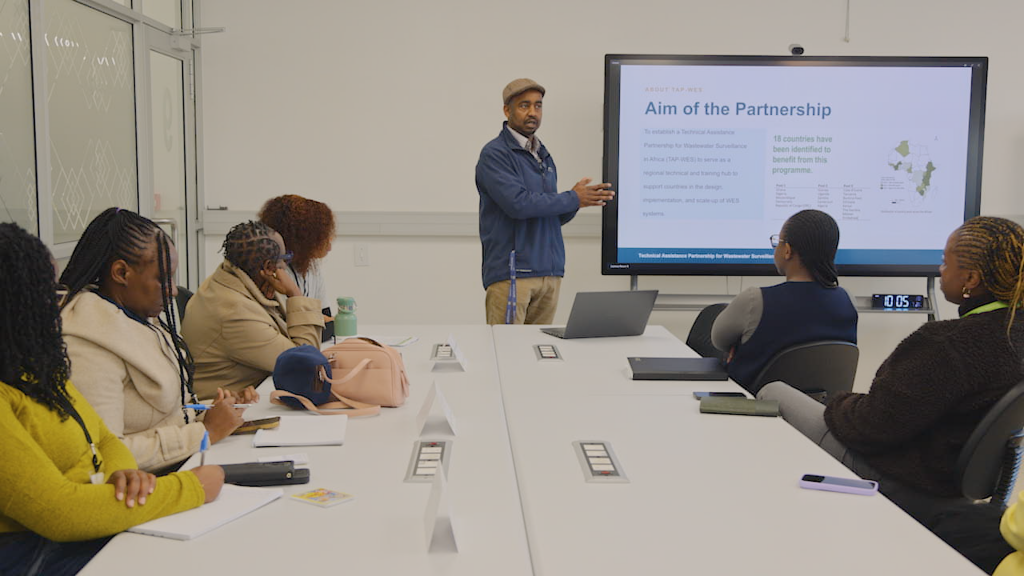
The programme also shares South Africa’s experience in integrating wastewater surveillance into routine public health surveillance. Through this work, the NICD supports countries in developing policies, designing surveillance systems, strengthening laboratory capacity, improving data analysis, and integrating wastewater surveillance with clinical surveillance and pandemic preparedness.
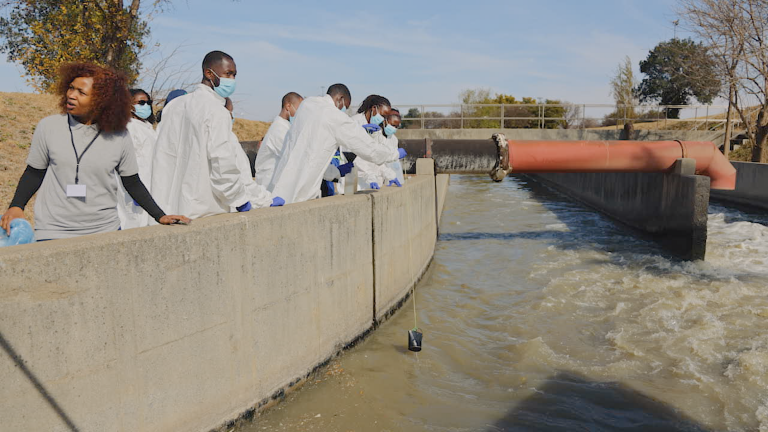
The two-week training combines classroom learning with practical, hands-on experience. During the first week, participants undertook a field sampling exercise and received laboratory training in sample concentration, nucleic acid extraction, and pathogen detection using both digital and real-time PCR platforms. The second week focuses on data management, epidemiological analysis, reporting, and introductory bioinformatics, with specialised bioinformatics sessions delivered in collaboration with the Scripps Research Institute in the United States.
By building technical expertise and fostering collaboration between African public health institutions, TAP-WES aims to strengthen regional capacity to detect and respond to infectious disease threats through wastewater surveillance. The programme contributes to a more coordinated and resilient public health surveillance network across the continent.
The TAP-WES programme is funded by the Gates Foundation and is implemented in partnership with WHO-AFRO, with technical collaboration from the Scripps Research Institute.