
The National Institute for Communicable Diseases’ Division for Biosafety and Biosecurity (DBB), through the Southern Regional Centre of Excellence for Biosafety and Biosecurity (RCoEBB), continues to advance biosafety and biosecurity capacity across Africa.
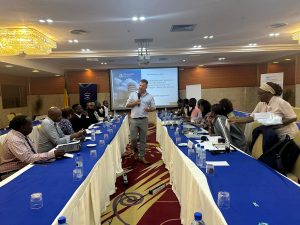
In November, the DBB contributed to the development and delivery of a contextualised biorisk management training course for the World Health Organization African Region (WHO AFRO) Polio Laboratory Network in Cotonou, Benin. Based on the Africa CDC Level 1 Biorisk Management course, the training was adapted to address the operational needs of poliovirus diagnostic laboratories.
The Southern RCoEBB led the development and delivery of the English-language course, with support from the Western RCoEBB, whose regional subject matter experts from Senegal and Cameroon facilitated a parallel French-language course. This collaboration showcased the value of African regional expertise in delivering accessible, harmonised training across linguistic and geographical boundaries.
Representing 17 African nationalities, participants engaged in interactive learning, practical exercises and peer-to-peer knowledge sharing. A specially developed poliovirus risk management exercise encouraged participants to translate theoretical knowledge into practical laboratory applications.
The training demonstrated impressive learning outcomes, with average knowledge assessment scores increasing for over 90% of assessed participants. Participant feedback was overwhelmingly positive, with all 35 respondents rating the training as good or excellent and confirming its relevance to their work.
This initiative highlights the DBB’s commitment to strengthening regional laboratory capacity, fostering collaboration between African centres of excellence and promoting sustainable, risk-based approaches to biosafety and biosecurity in support of global polio eradication efforts.