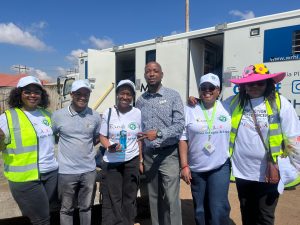

From week 1 to week 29 of 2025, national measles surveillance has detected 520 laboratory-confirmed measles cases. In the past four weeks, epi-week 26 to epi-week 29, 173 laboratory-confirmed cases were reported, 129 cases in Gauteng province, 23 in the Free State province, and 9 in Mpumalanga province. Measles cases are increasing in Mpumalanga province, where nine cases were detected between epidemiological weeks 24 and 29, 6 in the Nkangala district, 3 in the Gert Sibande and 1 in the Ehlanzeni district. The reported measles infections were mainly in children aged 1-14 years, which was similar across the provinces.
Update on the measles outbreak in South Africa
Gauteng province measles outbreak update
Gauteng province continues to report a high number, with 370 laboratory-measles cases reported from Epi-week 1 to 29 of 2025 . The majority of the laboratory-confirmed cases were reported in the metropolitan areas with the distribution of cases as follow: City of Johannesburg (104), City of Tshwane (184), Ekurhuleni (72), Sedibeng (8), and West Rand (2).
Free State province measles outbreak update
The Free State province continues to report laboratory-confirmed measles cases, with 82 cases reported from from Epi-week 1 to 29 of 2025 . The majority of the laboratory-confirmed cases were reported in the Lejweleputswa district, which reported 80 cases, and 23 cases were reported from epidemiological weeks 26 to 29. The increase in measles cases occurred during the school holidays.
Recommendations
Mpumalanga province should strengthen the measles surveillance and do risk assessment for measles transmission while they are implementing the public health response for the currently detected measles cases. Measles awareness should be in communities to alert the communities about the ongoing measles outbreak, and parents should be encouraged to vaccinate their children to protect them against measles infections. Measles infections can lead to complications such as pneumonia, ear infections, diarrhoea, encephalitis (swelling of the brain) and death. Parents whose children have missed their scheduled routine measles immunisation vaccine doses are encouraged to take their children for a measles vaccination catch-up dose.
Clinicians should report the suspected measles cases and collect blood specimens for laboratory confirmation, and also report patients who develop measles signs and symptoms using the NMC surveillance system.These include strengthening routine immunisation services and launching a mass vaccination campaign targeting children up to 15 years of age. High-incidence districts such as Tshwane and Johannesburg should be prioritised. Public awareness efforts must be intensified to address vaccine hesitancy and improve case reporting. Continued environmental surveillance through wastewater testing should be maintained to monitor trends and guide response activities.
Relevant resources, including the case definition, investigation form, and surveillance results, are available on the NICD measles page and the measles-rubella dashboard.